
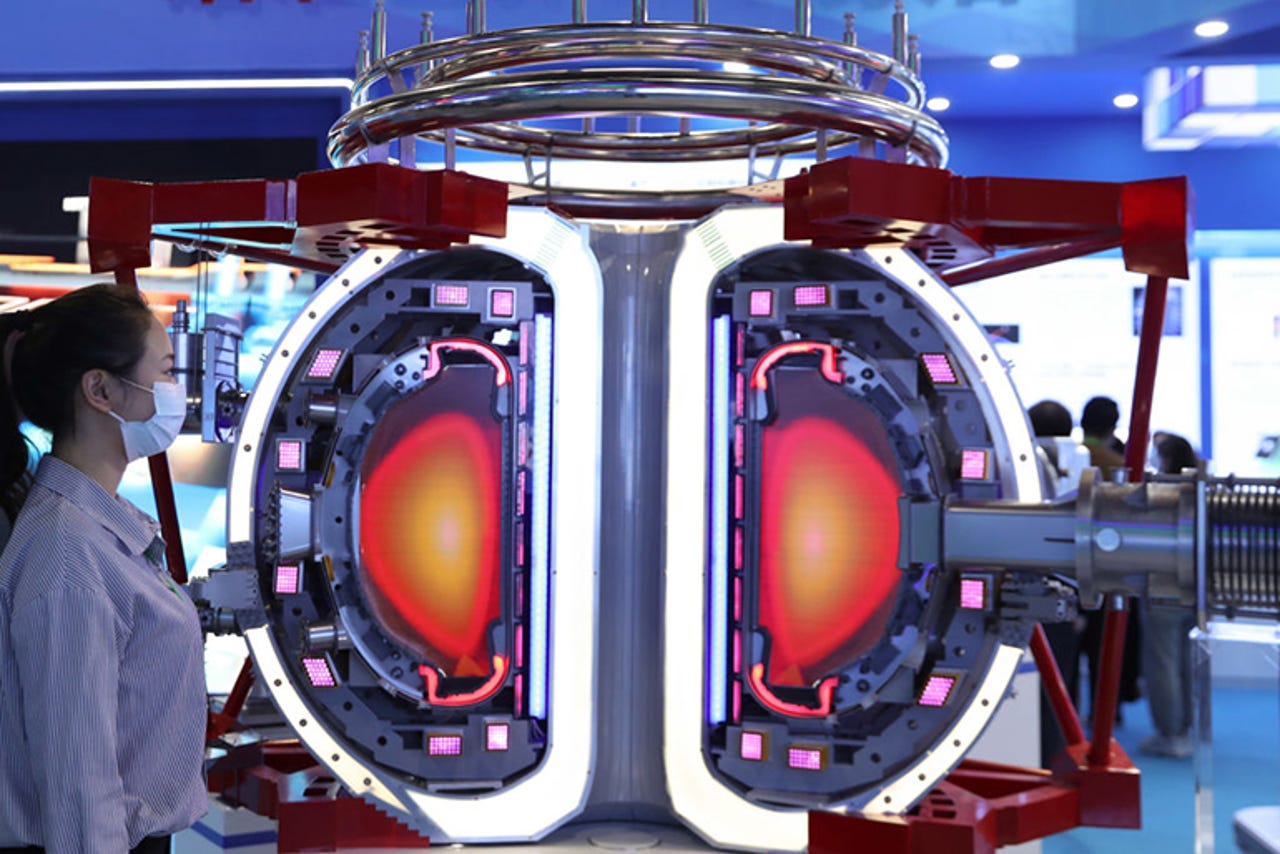
A model of a tokamak, a key component in the process of nuclear fusion for electricity generation.
Image: Jiang Qiming/China News Service via Getty ImagesAlphabet-owned DeepMind has developed an AI that shows promise for controlling magnetic devices that keep super-hot and unruly plasma in a stable configuration, enabling nuclear fusion for electricity generation.
These plasma-confining devices, called tokamaks, are formed using a series of high-power magnetic coils to create a vessel in which plasma is controlled at temperatures as hot as the sun's core. Correctly confined plasma can allow nuclear fusion to occur between hydrogen atoms and is being studied as a sustainable method of generating electricity.
- Every product unveiled at the Made by Google event: Pixel 8 Pro, Watch 2, Assistant, more
- Pixel 8 Pro vs. Pixel 7 Pro: Is it worth the upgrade?
- Your Pixel Buds Pro are getting a major software upgrade, and it's totally free
- How to preorder the Google Pixel 8, Pixel Watch 2, and Pixel Buds Pro now
- ChatGPT vs. Bing Chat vs. Google Bard: Which is the best AI chatbot?
Researchers from DeepMind and EPFL's Swiss Plasma Center (SPC) detail in a new paper in Nature how they helped create a set of DeepMind AI algorithms capable of controlling the shape of plasma inside the vessel.
SEE: Employers are desperate for data scientists as demand booms
The SPC has a "variable-configuration tokamak" (TCV) vacuum vessel for testing plasma confinement for nuclear fusion. SPC needed a way to ensure that it can reliably pick the right values for each variable, such as voltage, for the control system's plasma confinement.
SPC already had a well-informed simulator, but its users still need to run lengthy calculations to determine the right value for each variable in the control system, according to SPC.
With the right values, the control system can confine plasma in a way that avoids it, for example, colliding with the walls of the TCV vacuum vessel, in which case the plasma would deteriorate.
The researchers say they have created a "previously undescribed architecture for tokamak magnetic controller design that autonomously learns to command the full set of control coils." This architecture can reduce the effort required to produce new plasma configurations.
Per SPC's blogpost, DeepMind's AI, which was trained on its simulator, can create and maintain specific plasma configurations, including, as described in the paper, "elongated, conventional shapes, as well as advanced configurations, such as negative triangularity and 'snowflake' configurations."
DeepMind and SPC also ran the algorithms successfully on SPC's actual TVC, not just its simulator. They also demonstrated a sustained configuration of two separate plasma "droplets" inside the vessel.
DeepMind has yet to publish its post about the research but will do so eventually at this link.
Innovation
-
I tried Apple Vision Pro and it's far ahead of where I expected
-
This tiny satellite communicator is packed full of features and peace of mind
-
How to use ChatGPT: Everything you need to know
-
These are my 5 favorite AI tools for work