
You're running your business from a laptop, maybe a coffee shop, maybe three time zones away from your last client call. A free Gmail or Outlook.com address doesn't cut it anymore when you're invoicing clients or trying to look like more than a one-person operation. What you need is email hosting that makes you look established without demanding an IT department you don't have.
I tested the platforms freelancers and small remote teams actually consider when they outgrow free email, weighing setup time, pricing transparency, and how well each one plays with a team that's never in the same room. Here's what I found.
Get more in-depth tech coverage: Add us as a preferred Google source on Chrome and Chromium browsers.
Best web hosting deals of the week
-
Hostinger - Save 80% Off 2 Years Premium Plan + 3 Months Free :$3 (save $10)
-
IONOS - Save 93% Off 1 Year IONOS Plus Plan :$1 (save $13)
-
HostGator - Save 76% Off 3 Years HostGator Hatchling Plan :$3 (save $9)
-
InMotion Hosting - Save 81% Off 1 Year Core Plan :$3 (save $10)
What is the best email hosting for small businesses right now?
My top pick is Google Workspace , and it's not a close call for most freelancers and remote teams. It bundles custom-domain email with Docs, Drive, and Meet, so a solo founder or a five-person remote team gets a full office suite without stitching together separate subscriptions. Setup takes minutes, the mobile apps are the ones your clients already know, and Gemini AI is now baked into every tier rather than sold as a pricey add-on.
Also: The best small business web hosting services
The best email hosting for small businesses of 2026
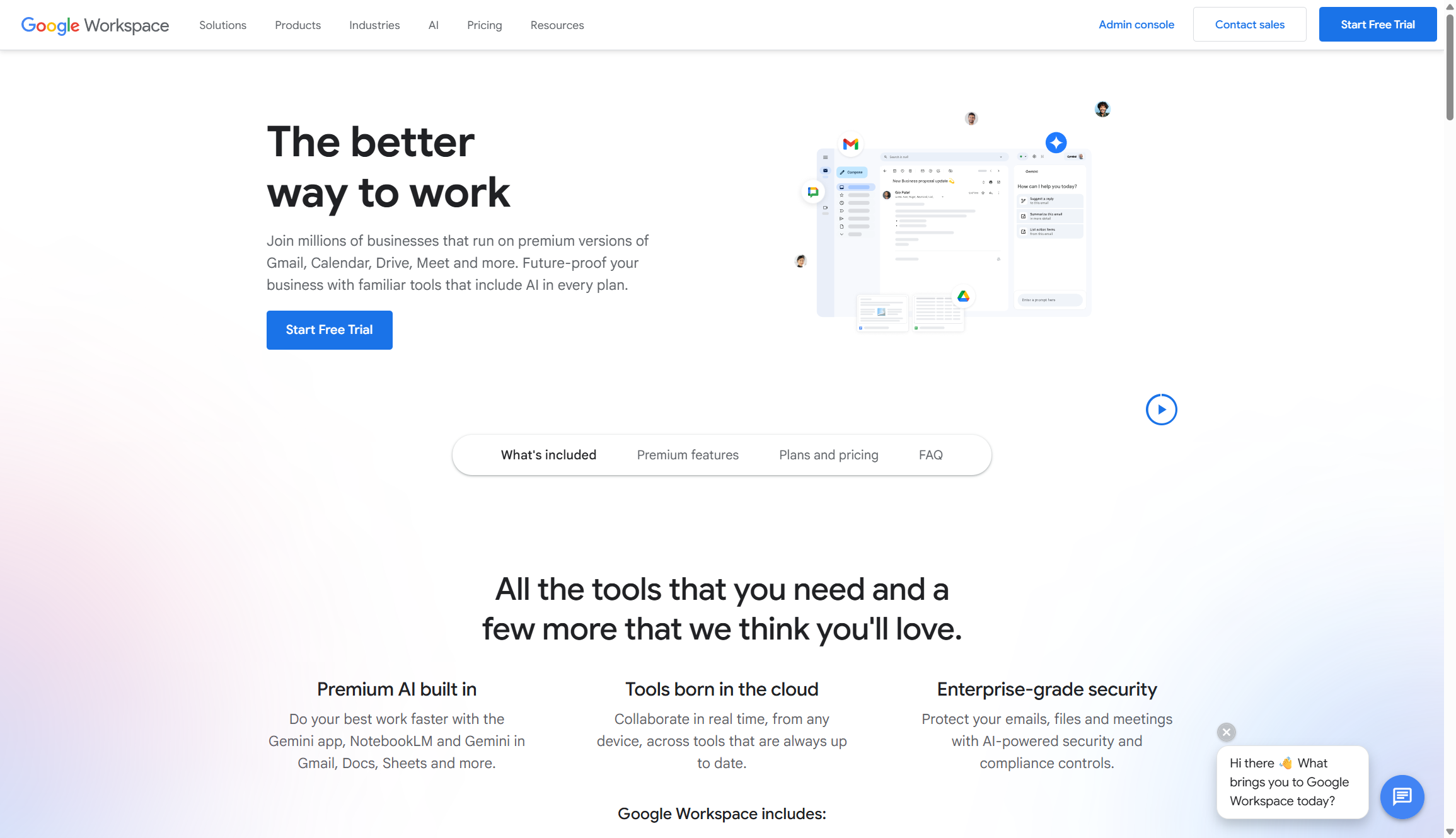
Google Workspace is the default choice for a reason. It's built on Gmail, so there's no learning curve for you or your clients, and comes with the full suite of Docs, Sheets, Slides, Drive, and Meet with every plan. For a freelancer replacing a Gmail.com address, or a remote team that needs shared calendars and video calls without buying a separate tool, that bundling saves real money.
Business Starter runs $7 per user monthly on an annual plan, with 30GB of pooled storage, custom business email, and Gemini AI in Gmail. Business Standard steps up to $14 per user monthly with 2TB of storage and Gemini across every app including Docs, Sheets, and Meet. I found Standard is where most small teams land, since Starter's 30GB fills up fast once you're storing client files alongside email.
Also: Google Workspace now lets you create AI agents to automate your work - how to get started
The setup process took me under 15 minutes from signup to sending my first email from a custom domain, using Google's guided DNS verification. Where it gets frustrating is cost creep: Every team member needs a full paid seat, there's no discounted option for shared inboxes like info@ or support@, and Google has raised prices twice in the past two years to fold in AI features you may not use.
Still, if your business already runs on Google tools, or you want your email hosting to double as your document and video conferencing platform, nothing else on this list matches the breadth. Freelancers who only want email and nothing else should keep reading, because you'll likely pay less elsewhere.
Google Workspace features: Custom business email | Gemini AI assistant | Google Meet video calls | 30GB to 5TB pooled storage | Docs, Sheets, Slides | Google Drive | 24/7 support
- Familiar Gmail interface
- AI included at every tier
- Deep app ecosystem
- Storage is pooled, not per-app
- Price climbed again this year
- No shared mailboxes without extra seats
Google Workspace
Best for freelancers who want email plus a full productivity suite
Google Workspace is the default choice for a reason. It's built on Gmail, so there's no learning curve for you or your clients, and comes with the full suite of Docs, Sheets, Slides, Drive, and Meet with every plan. For a freelancer replacing a Gmail.com address, or a remote team that needs shared calendars and video calls without buying a separate tool, that bundling saves real money.
Business Starter runs $7 per user monthly on an annual plan, with 30GB of pooled storage, custom business email, and Gemini AI in Gmail. Business Standard steps up to $14 per user monthly with 2TB of storage and Gemini across every app including Docs, Sheets, and Meet. I found Standard is where most small teams land, since Starter's 30GB fills up fast once you're storing client files alongside email.
Also: Google Workspace now lets you create AI agents to automate your work - how to get started
The setup process took me under 15 minutes from signup to sending my first email from a custom domain, using Google's guided DNS verification. Where it gets frustrating is cost creep: Every team member needs a full paid seat, there's no discounted option for shared inboxes like info@ or support@, and Google has raised prices twice in the past two years to fold in AI features you may not use.
Still, if your business already runs on Google tools, or you want your email hosting to double as your document and video conferencing platform, nothing else on this list matches the breadth. Freelancers who only want email and nothing else should keep reading, because you'll likely pay less elsewhere.
Google Workspace features: Custom business email | Gemini AI assistant | Google Meet video calls | 30GB to 5TB pooled storage | Docs, Sheets, Slides | Google Drive | 24/7 support
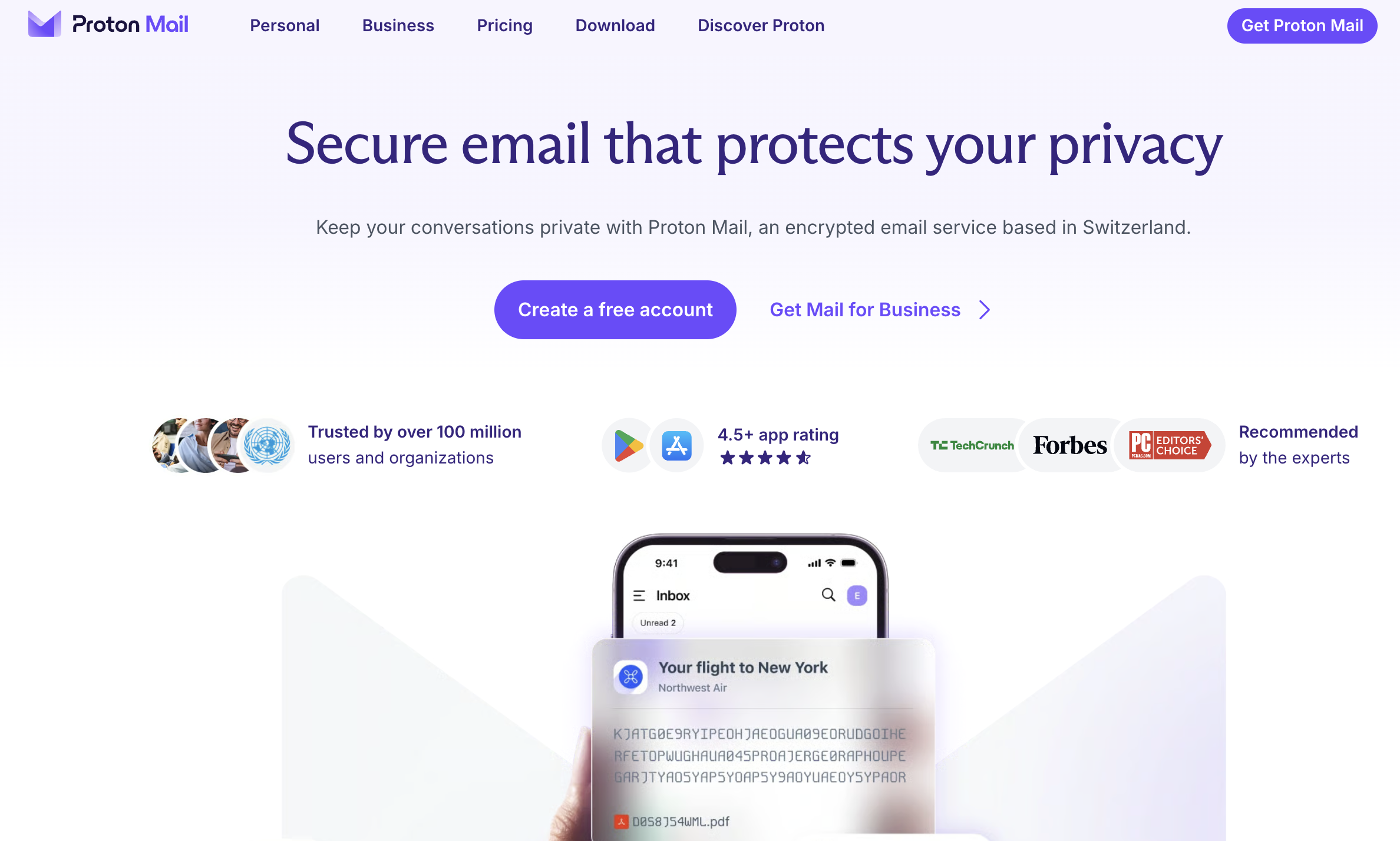
Proton Mail built its reputation on privacy, and that hasn't changed with its 2026 business tiers. The company is based in Switzerland with strict data protection laws behind it. This means every email is encrypted end-to-end by default and Proton doesn't scan your inbox to serve you ads or train AI models. For freelancers handling sensitive client data like legal, healthcare, or financial work, that's a genuine differentiator rather than marketing spin.
Mail Essentials starts around $7 per user monthly on an annual plan and covers custom domains, calendar sharing, and SMTP access for connecting outside tools. Workspace Standard, priced at around $13 per user monthly, adds 1TB of storage plus Proton's full productivity suite: Drive, Docs, Sheets, and video meetings for up to 50 participants. Workspace Premium pushes past $19 per user monthly and unlocks 3TB of storage and the Lumo AI writing assistant.
Also: Proton just launched a Google Workspace alternative - and it's fully encrypted
I ran into the platform's most-cited limitation almost immediately: Proton doesn't support standard IMAP or SMTP the way Gmail does, so using it inside Outlook or Apple Mail means installing Proton's Bridge app, which is only available on paid plans. That's a dealbreaker for teams who live in a specific email client and don't want another background process running.
For a solo freelancer who mostly stays inside Proton's own apps, though, the encryption and privacy tools genuinely deliver, and migrating from Google Workspace is handled through Proton's own Easy Switch tool. Note that pricing pages didn't fully render exact current figures during my research, so double-check Proton's official business plans page before you commit a team to a paid tier.
Proton Mail features: Zero-access encryption | Custom email domains | Proton Sentinel security | Encrypted calendar and Drive | Built-in VPN | Password manager | Lumo AI assistant
- End-to-end encryption by default
- Swiss data jurisdiction
- Bundled VPN and password manager
- No traditional IMAP without a bridge app
- Business tiers cost more than rivals
- Steeper learning curve for teams
Proton Mail
Best for privacy-focused freelancers and regulated industries
Proton Mail built its reputation on privacy, and that hasn't changed with its 2026 business tiers. The company is based in Switzerland with strict data protection laws behind it. This means every email is encrypted end-to-end by default and Proton doesn't scan your inbox to serve you ads or train AI models. For freelancers handling sensitive client data like legal, healthcare, or financial work, that's a genuine differentiator rather than marketing spin.
Mail Essentials starts around $7 per user monthly on an annual plan and covers custom domains, calendar sharing, and SMTP access for connecting outside tools. Workspace Standard, priced at around $13 per user monthly, adds 1TB of storage plus Proton's full productivity suite: Drive, Docs, Sheets, and video meetings for up to 50 participants. Workspace Premium pushes past $19 per user monthly and unlocks 3TB of storage and the Lumo AI writing assistant.
Also: Proton just launched a Google Workspace alternative - and it's fully encrypted
I ran into the platform's most-cited limitation almost immediately: Proton doesn't support standard IMAP or SMTP the way Gmail does, so using it inside Outlook or Apple Mail means installing Proton's Bridge app, which is only available on paid plans. That's a dealbreaker for teams who live in a specific email client and don't want another background process running.
For a solo freelancer who mostly stays inside Proton's own apps, though, the encryption and privacy tools genuinely deliver, and migrating from Google Workspace is handled through Proton's own Easy Switch tool. Note that pricing pages didn't fully render exact current figures during my research, so double-check Proton's official business plans page before you commit a team to a paid tier.
Proton Mail features: Zero-access encryption | Custom email domains | Proton Sentinel security | Encrypted calendar and Drive | Built-in VPN | Password manager | Lumo AI assistant